Introducing ActiPatch®

Pop a Patch, Not a Pill.

Wear it over the spot that hurts, alongside your other care for muscle and joint pain. Take the 5-minute Pain Check to see where to wear it and what studies found for people like you.

Free shipping on ActiPatch® single, double, and triple packs (US addresses only, through December 31, 2026)

Read customer testimonials
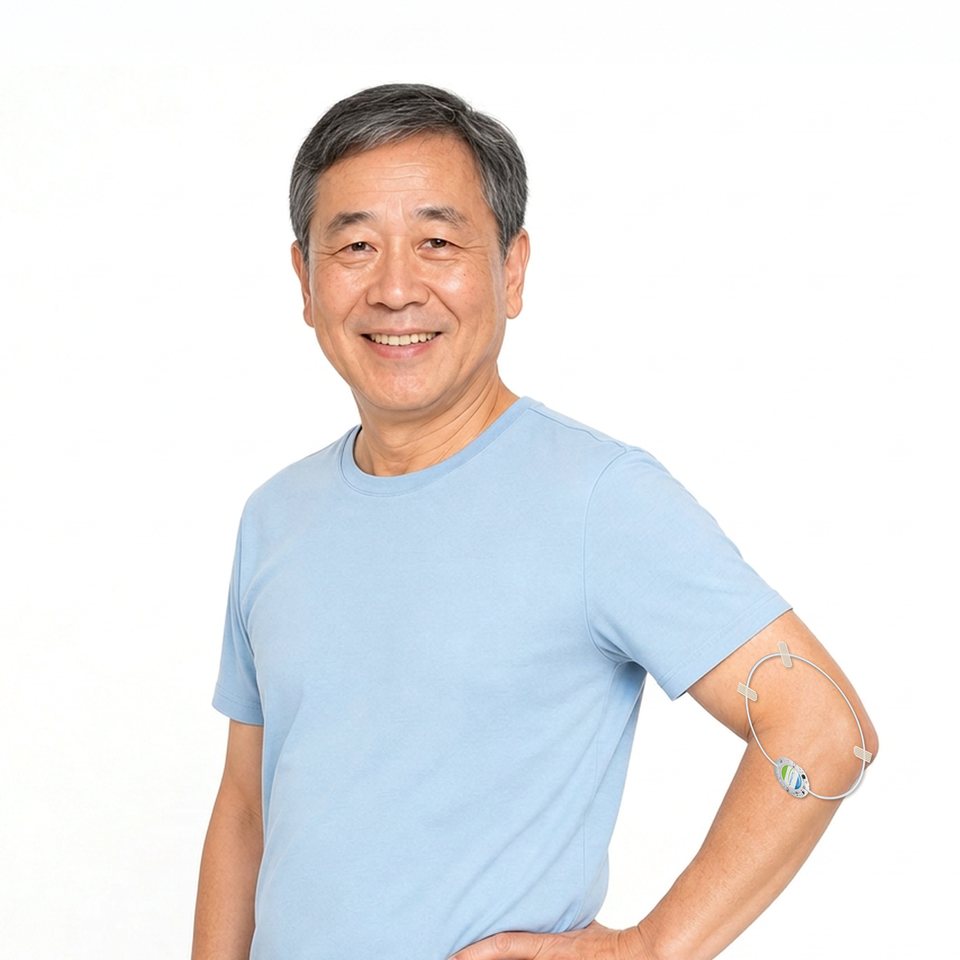
Smiling Asian man wearing an ActiPatch® loop and control unit taped on the skin of his right upper arm near the elbow
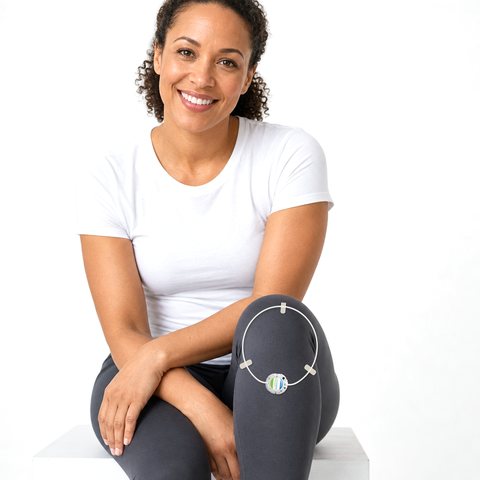
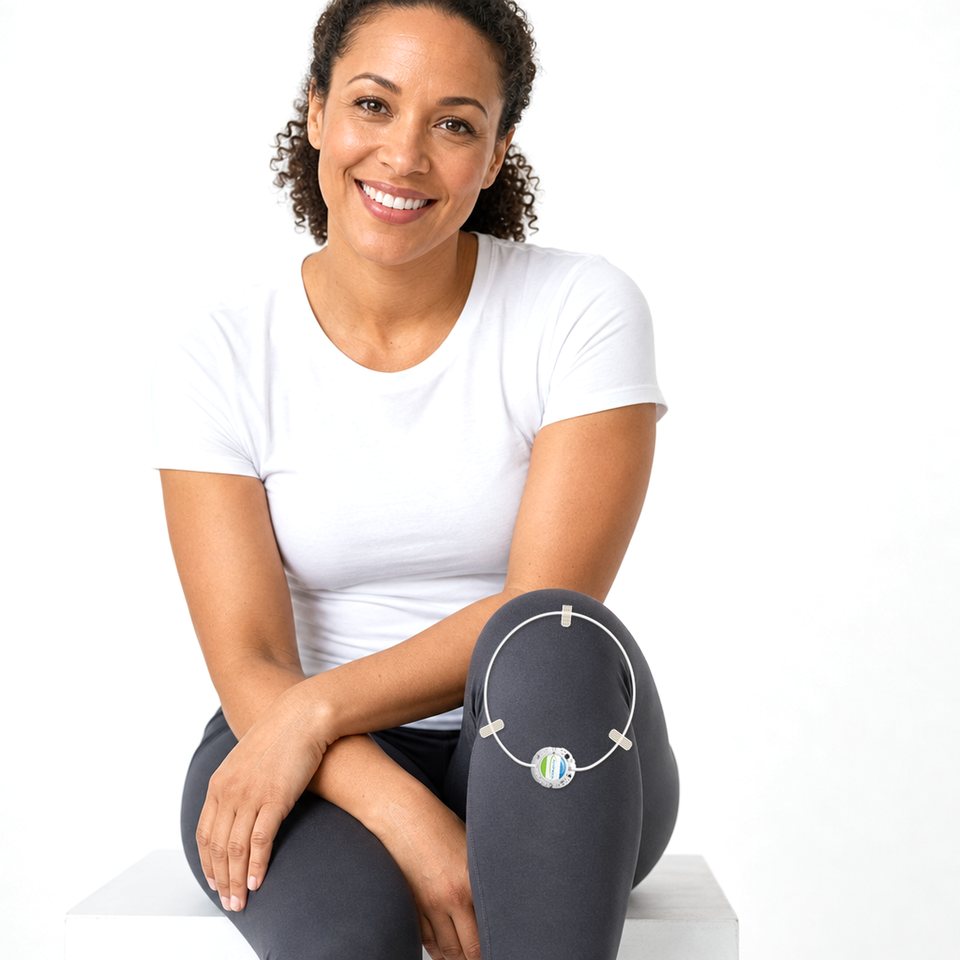
Smiling mixed-race woman wearing an ActiPatch® loop and control unit taped over thin leggings on her right knee
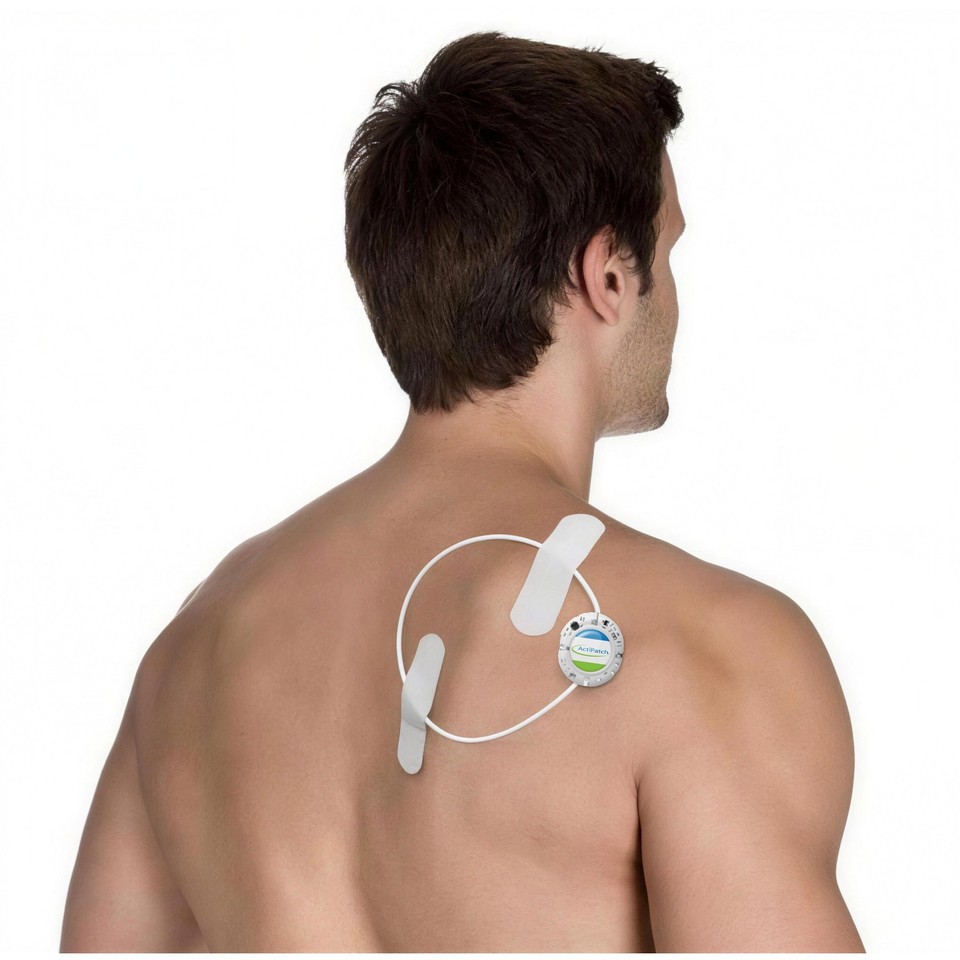
South Asian woman wearing an ActiPatch® loop and control unit taped on the skin of her lower back

67%of users cut or quit pain medsSource

Worn where it hurts, on skin or over thin clothing.
NASA feasibility report · 2020Explore NASA’s review of 4 drug-free pain relief options for future space missions →

Meet ActiPatch®

See ActiPatch® in action

A closer look at the wearable device, from BioElectronics Corporation.

Read all testimonials

Where does it hurt?

Choose an area for wearing guidance and related information.

The same standard ActiPatch® model is used for the areas shown. Pick an area for placement guidance, or go straight to the shop.

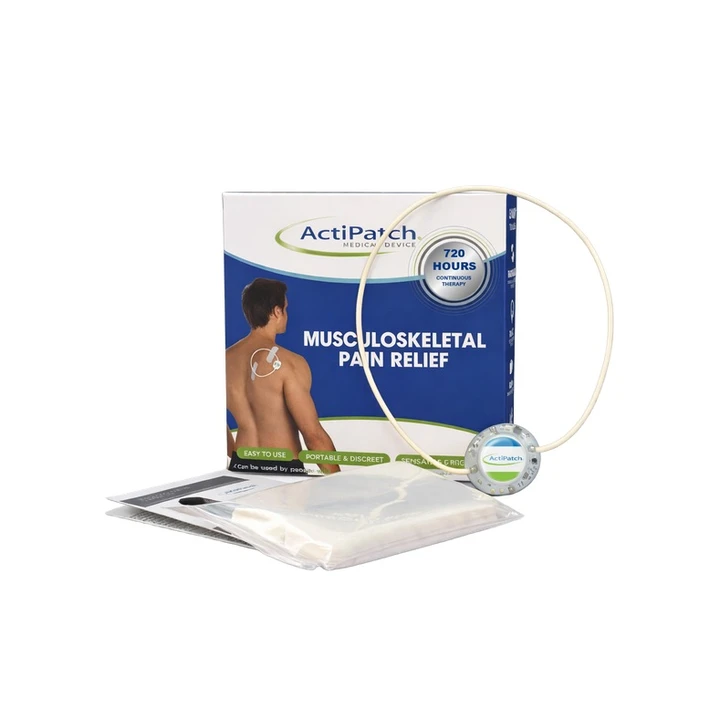
A single ActiPatch device: a thin white wire loop joined to a small round control unit

Standard loop: 12 cm (4.7 inches) in diameter. Image not to scale.

Optional: Pain Check, about 5 minutesBrowse all pain guides

From the evidence library

What does the evidence show?

ActiPatch® is FDA-cleared (510(k) K192234) for over-the-counter adjunctive treatment of musculoskeletal pain. These counts cover selected ActiPatch® clinical publications, not laboratory studies or studies of other devices. Study conditions and protocols differ, and individual results vary.

Published records
6
Each paper counted once
Randomized controlled trials
3
Library design label: RCT
Publication years
2012–2021
Earliest to latest record
What do clearance and research tell us?

FDA clearance identifies the device's permitted use; it is not an endorsement or a guarantee of results. The ActiPatch® pain trials did not measure circulation, tissue repair or inflammation.

Read the FDA clearance record (opens in a new tab)

How soon might I notice a difference?

Individual experiences vary. Many people report noticing relief within a few hours; for some, it can take up to four days of consistent wear. Keep following the package directions and do not change medications or prescribed care without speaking with your healthcare provider.

RCT2016 · Rheumatology (Oxford)

Pulsed Electromagnetic Fields in Knee Osteoarthritis: A Double-Blind Placebo-Controlled Randomized Clinical Trial

Bagnato GL, Miceli G, Marino N, Sciortino D, Bagnato GF

In a four-week, randomized, double-blind, placebo-controlled ActiPatch® trial in knee osteoarthritis, 66 people were randomized and 60 completed the study. The investigators reported improvements in pain and physical function compared with placebo. Participants wore the device 12 hours a day.

Read the source publication(opens in a new tab)
RCT2012 · Journal of Foot and Ankle Surgery

Pulsed Radiofrequency Electromagnetic Field Therapy: A Potential Novel Treatment of Plantar Fasciitis

Brook J, Dauphinee DM, Korpinen J, Rawe IM

A seven-day, randomized, double-blind, placebo-controlled trial studied nightly use for plantar fasciitis. Among 70 participants who completed the study, the active-treatment group reported a greater reduction in morning pain than the placebo group.

Read the source publication(opens in a new tab)
Pain-medication use

In a 4-week neck-pain trial, ActiPatch® users took fewer rescue painkiller doses than the prescription-drug comparison group.

200 adults with neck osteoarthritis: 6.7 rescue paracetamol doses with ActiPatch® versus 13.4 with etoricoxib. This single-center, manufacturer-funded trial was not blinded and had no sham group. The ActiPatch® group was older and had more pain at baseline.

Use alongside prescribed care. Ask your clinician before changing medicines.

Read the published study(opens in a new tab)

Evidence describes study results, not a promise of the same result for everyone. This is not medical advice.

Explore the full evidence library

What the research found

Studied in people who were already taking pain medicine

The trials compare ActiPatch® with a placebo device. The surveys follow real users at home with no placebo group, so read them as what users reported, not proof of cause. Individual results vary.

  • Customer survey

    72%

    of users taking pain medication reduced it

    In BioElectronics' US and Canada customer survey, 70% of responders were taking pain medication. Of those, 72% reported using less, and average pain relief was 50%.

    View the survey (opens in a new tab)
  • 3-month follow-up

    67%

    Cut pain meds moderately to completely

    Users followed for 3 months, including opioid users, reported moderate to complete elimination of pain medication. 70% also slept better, 74% were more active and 84% reported better quality of life.

    See the survey data (opens in a new tab)
  • User registry

    65%

    Reported a meaningful pain drop

    Of about 5,000 UK users who rated a 7-day trial, 65% reported pain down 2 or more points on a 0 to 10 scale. Their pain fell 57% on average.

    Read the study (opens in a new tab)
  • Randomized trial

    26%

    Stopped pain meds, vs 3% on placebo

    Knee osteoarthritis patients wore it 12 hours a day for a month. 8 of 30 on ActiPatch® stopped NSAIDs or painkillers, compared with 1 of 30 on an identical placebo device.

    Read the study (opens in a new tab)
  • Randomized trial

    40%

    Less morning heel pain in 7 days

    Plantar fasciitis patients wore it overnight for a week. Morning pain fell 40% on ActiPatch® versus 7% on placebo (70 people).

    Read the study (opens in a new tab)
  • 6-month follow-up

    52%

    Cut pain meds a lot or a fair amount

    240 users who got relief in week 1 were followed for 6 months. 52% reduced their medication meaningfully and about 28% stopped analgesics altogether.

    Read the study (opens in a new tab)
See all the clinical evidence (opens in a new tab)

Every study, survey and chart from the manufacturer, BioElectronics Corporation.

Mechanism of action

How ActiPatch® delivers pulsed shortwave therapy

ActiPatch® uses pulsed shortwave therapy (PSWT). It sends a low-power radio-frequency signal into the tissue under the loop. Researchers are investigating its effects on nerve activity. It is designed to work without heat or tingling and is used alongside other care for musculoskeletal pain.

Diagram: the ActiPatch loop sends a 27.12 MHz signal at 1,000 pulses per second into the skin and tissue at the sore spot, where a sensory nerve carries signals to the spinal cord. The effect on nerve activity remains under investigation.skin and tissue at the sore spot27.12 MHz · 1,000 pulses/ssensory nervespinal cordsignals
  1. Step 1 · The signal

    A tiny pulsed radio wave

    A battery-powered chip makes a 27.12 MHz signal, a frequency the FCC sets aside for industrial, scientific and medical (ISM) use. It pulses 1,000 times a second, each pulse 100 microseconds long, so it is on only 10% of the time.

  2. Step 2 · The loop

    Focused over the pain

    The loop is an antenna. It keeps the field concentrated inside the ring, over about 110 cm² of tissue. The field passes through clothing and bandages, so it needs no skin contact or electrodes.

  3. Step 3 · The nerves

    A proposed nerve effect

    Researchers are investigating whether low-power radiofrequency fields influence nerve activity. This proposed explanation is not proof of how ActiPatch® produces pain relief in each person. Koneru et al., 2016 (opens in a new tab)

  4. Step 4 · The brain

    Measuring pain relief

    Clinical trials compare outcomes such as pain scores with a placebo device. Those outcomes can help evaluate pain relief, but do not by themselves establish the underlying nerve mechanism.

  5. Step 5 · Over time

    Results over time

    Longer-term follow-up studies can describe reported changes during use. Without a placebo group, they cannot establish lasting benefit or reversal of nerve sensitization. Individual results vary.

Specifications

Standard 12 cm (4.7 inches) loop, 720-hour device.

FDA clearance
510(k) K192234
Therapy
27.12 MHz PSWT
Sensation
No tingling
Carrier
27.12 MHz
Pulse rate
1,000 /s
Pulse width
100 µs
Peak power density
73 µW/cm²
Therapy hours
Up to 720 h
Loop diameter
12 cm (4.7 inches)
Treatment area
About 110 cm² (17.1 in²)
Device weight
9.5 g
Battery
3 V CR2032, not replaceable
Controls
On/off switch
Duty cycle
10%
Prescription
Not required; over-the-counter (OTC)
Water resistance
Not waterproof

Sources: FDA 510(k) K192234 specifications and manufacturer instructions. Remove before showering, bathing, or swimming.

See the full mechanism

How it works

Simple to wear

A coin-sized control unit sends a gentle, nonthermal pulsed shortwave therapy (PSWT) signal through a thin loop into the area underneath. No pads, wires, app or pairing.

  1. 1

    Place the loop over the pain

    Secure it with the included tape or a wrap, or wear it over a thin layer of clothing. Avoid thick fabric between the device and the skin.

  2. 2

    Switch it on

    The indicator light confirms it is working. You will not feel tingling from the device.

  3. 3

    Go about your day

    Each device gives up to 720 therapy hours. Keep it dry and follow the package directions.

Full wear and placement guide

How ActiPatch® compares on everyday convenience

Six wear-and-use features, checked against the full comparison. This is about convenience, not which device relieves pain better.

Scroll sideways to see all four technologies.

Convenience features of ActiPatch® PSWT, conventional TENS, HFIT (Hinge Enso) and NMES. Scores count confirmed features only, not pain efficacy.
FeatureActiPatch®PSWTConventional TENSNerve stimulationHFITHinge EnsoNMESMuscle stimulation
No skin electrode padsYesNoNoNo
Can be worn over thin clothingYesNoNoNo
Continuous wear, no timed sessionsYesNoNoNo
Works without an appYesVariesNoVaries
No external wiresYesVariesYesVaries
No charging neededYesVariesNoVaries
Features confirmednot pain efficacy6 of 60 No0 of 63 No · 3 Varies1 of 65 No0 of 63 No · 3 Varies

Score = confirmed Yes answers out of 6, not pain relief. No means absent in normal use; Varies means model dependent, not a confirmed No. TENS and NMES refer to typical surface-electrode units; HFIT refers to Hinge Enso.

View full comparison

Beyond pain · Healing research

What pulsed electromagnetic therapy does in the body

Pulsed electromagnetic therapy has also been studied in wounds, in the skin cells that close them, and in blood vessels. These studies used other pulsed devices, some at different frequencies from ActiPatch®.

  • Randomized trial · 72 women

    Better wound healing by day 7

    After cesarean section, women treated with a pulsed electromagnetic device had better wound healing at day 7, with no fluid, redness or swelling, than women with a sham device. Half as many had severe pain in the first day, and they used about half the painkillers.

    Studied with RecoveryRx®, a prescription-only device.

    Khooshideh et al., Clin J Pain 2017 (opens in a new tab)Read the full write-up
  • Lab study · Human skin cells

    Fibroblasts closed a wound gap faster

    Fibroblasts are the cells that rebuild skin. Fibroblasts taken from slow-healing leg ulcers grew faster and closed a scratch "wound" in the dish faster after a 27.1 MHz pulsed field, catching up to cells from healthy skin.

    Costantini et al., Bioengineering 2024 (opens in a new tab)Read the full write-up
  • Randomized trial · Mayo Clinic

    PEMF improved blood vessel function

    People with high blood pressure used a pulsed electromagnetic field (PEMF) device for 12 weeks or joined a control group. Arteries in the PEMF group widened better when blood flow increased, a key sign of healthy vessels, and their blood pressure dropped. The control group did not change.

    Stewart et al., J Clin Hypertens 2020 (opens in a new tab)Read the full write-up

ActiPatch® is FDA-cleared for musculoskeletal pain, not for wound care. BioElectronics makes a separate prescription-only device, RecoveryRx®, for post-operative therapy. Talk to your clinician about any wound that isn't healing.For providersIn the provider portal, clinicians prescribe and order RecoveryRx® for post-operative use.For patientsIn their patient account, patients with a prescription order RecoveryRx®. ActiPatch® can be chosen and bought in both portals.Shop ActiPatch®For everyday muscle and joint pain, ActiPatch® is available without a prescription.

Choose your pack

Each device gives 720 therapy hours. More devices let you cover a second area or keep a spare.

  • Single pack

    1 device plus adhesive tape

  • Double pack

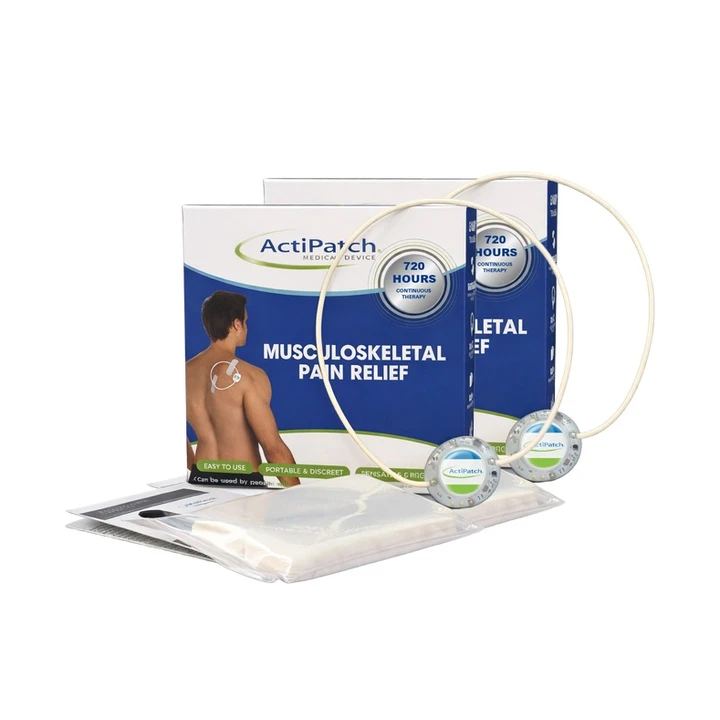
    2 devices plus adhesive tape

  • Triple pack

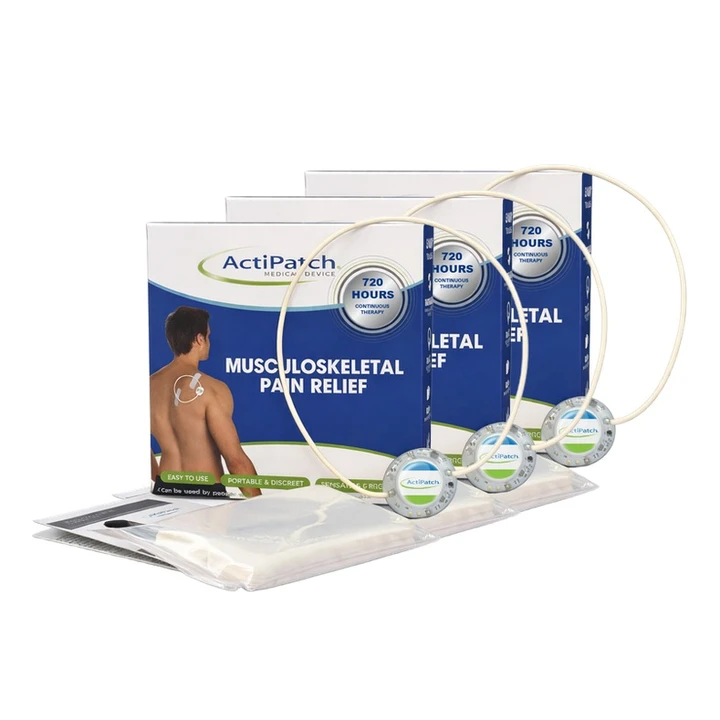
    3 devices plus adhesive tape

  • Free shipping on ActiPatch® single, double, and triple packs (US addresses only, through December 31, 2026)
  • 30-day money-back guarantee
  • Guest checkout, no account needed

Read it yourself

Sources

ActiPatch® is an FDA-cleared device (510(k) K192234) for over-the-counter adjunctive treatment of musculoskeletal pain. FDA clearance is not an endorsement or a guarantee of results. Survey and registry results are self-reported and have no placebo group. Individual results vary.

Pack contents, therapy hours and wear guidance come from the manufacturer directions for use. Prices come from the live store.

The Pain Check is educational and is not a diagnosis or medical advice. Do not stop or change any medication without talking to your doctor or pharmacist. ActiPatch® is made by BioElectronics Corporation (BIEL) and sold in the US by Electrome under an exclusive license.

Essential questions and safety

Who should not use it

  • Do not use if you have a cardiac pacemaker, implanted defibrillator, or other active implanted metallic or electronic device.
  • Do not use if you are pregnant or think you may be pregnant.
  • Not for use by or on children under 17.
  • Do not use for sudden or unexplained pain, or if the cause of the pain is unknown. Not for pain deep in the body such as the chest or stomach, and not for cancer-related pain.
  • The device is not sterile. Do not place it in direct contact with open wounds.
  • Check in with your doctor if the pain changes, gets worse, or isn't easing after a few weeks. If you are under a doctor's care, consult your doctor before use.

Full safety informationMore answers in Help